OpenVinyl: 3D-printed records
The figures from the writeup, one per screen, in order.
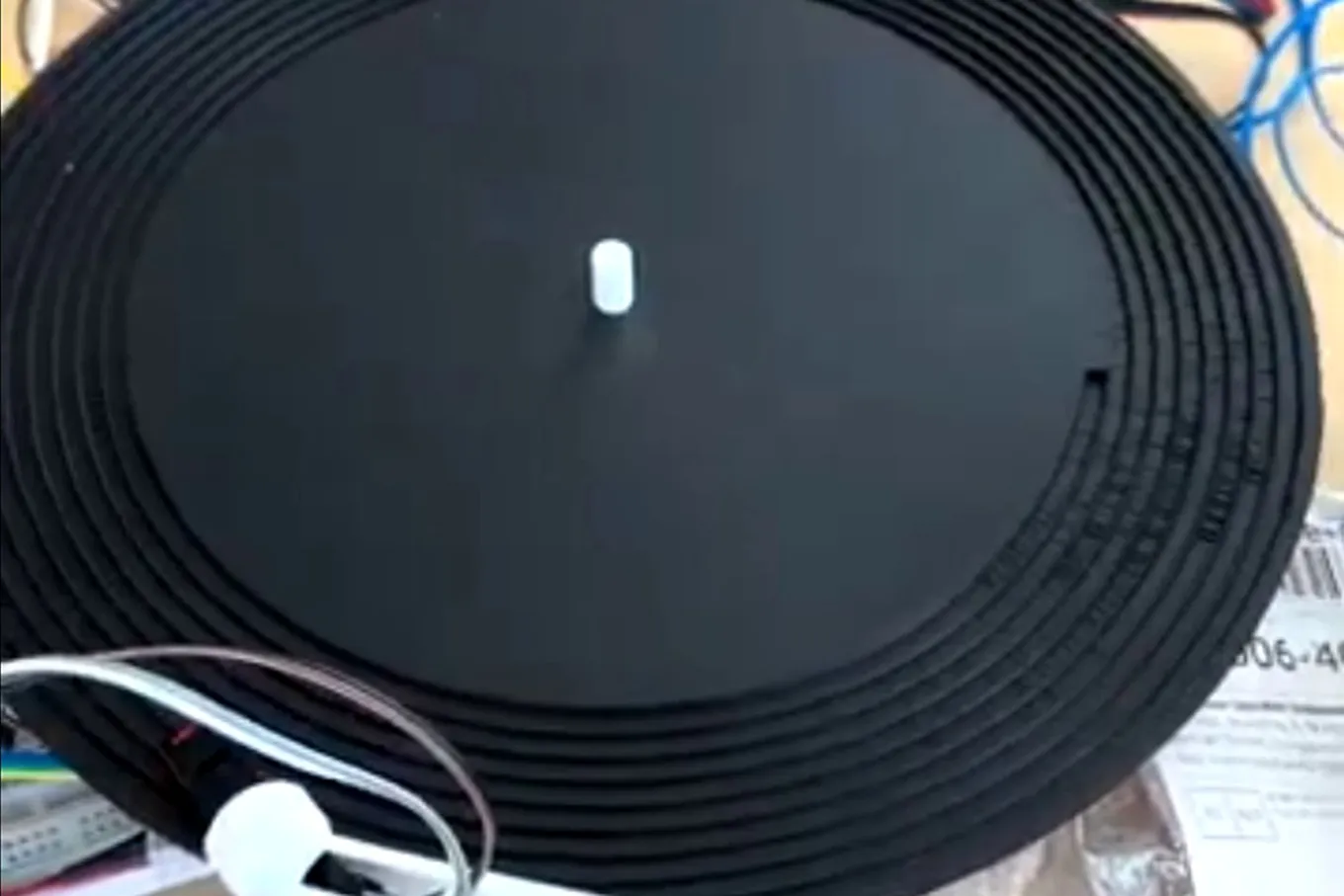
A hill-and-dale record printed and played on a hobby FDM printer (v1), and a lateral-cut encoder that writes the printer's G-code directly (v2, verified in software, not yet printed). Every groove parameter is derived from bead width, stylus contact and printer acceleration.
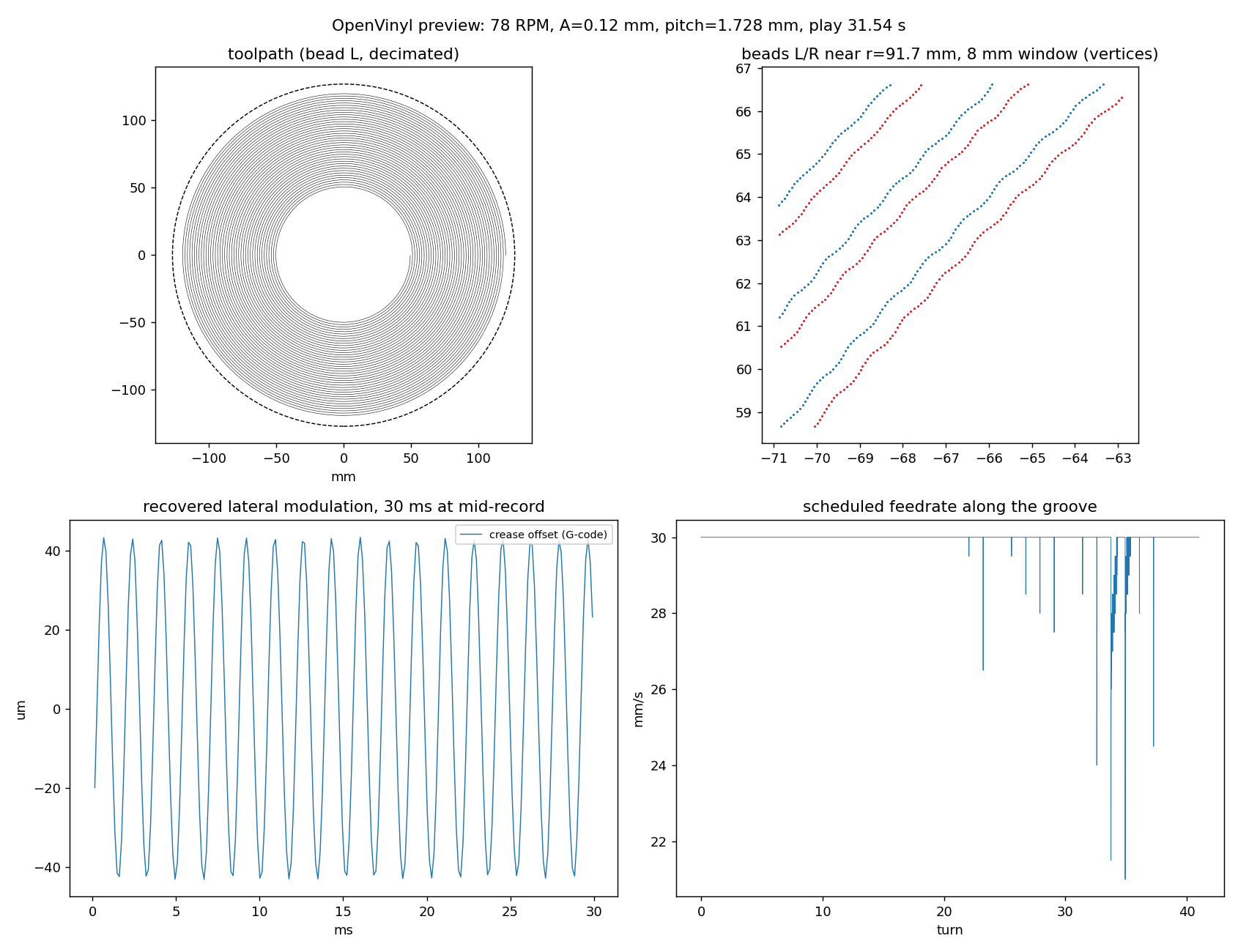
Preview of a 30 s synthetic melody at 78 RPM: toolpath, the two beads near mid-record, the lateral modulation recovered from the G-code, and the feedrate schedule
The melody G-code as the printer will run it, decoded from the file. The whole toolpath fills in as the L bead runs inward and the R bead returns outward, coloured by scheduled feedrate. A 3 mm window follows the nozzle with both beads at true width and the crease between them. The G-code lines being executed scroll beside it, and a cursor runs along the feedrate schedule, which dips where the modulation envelope is loud. Time runs at real speed at the start, the turnaround and the end, and up to 150 times faster between.
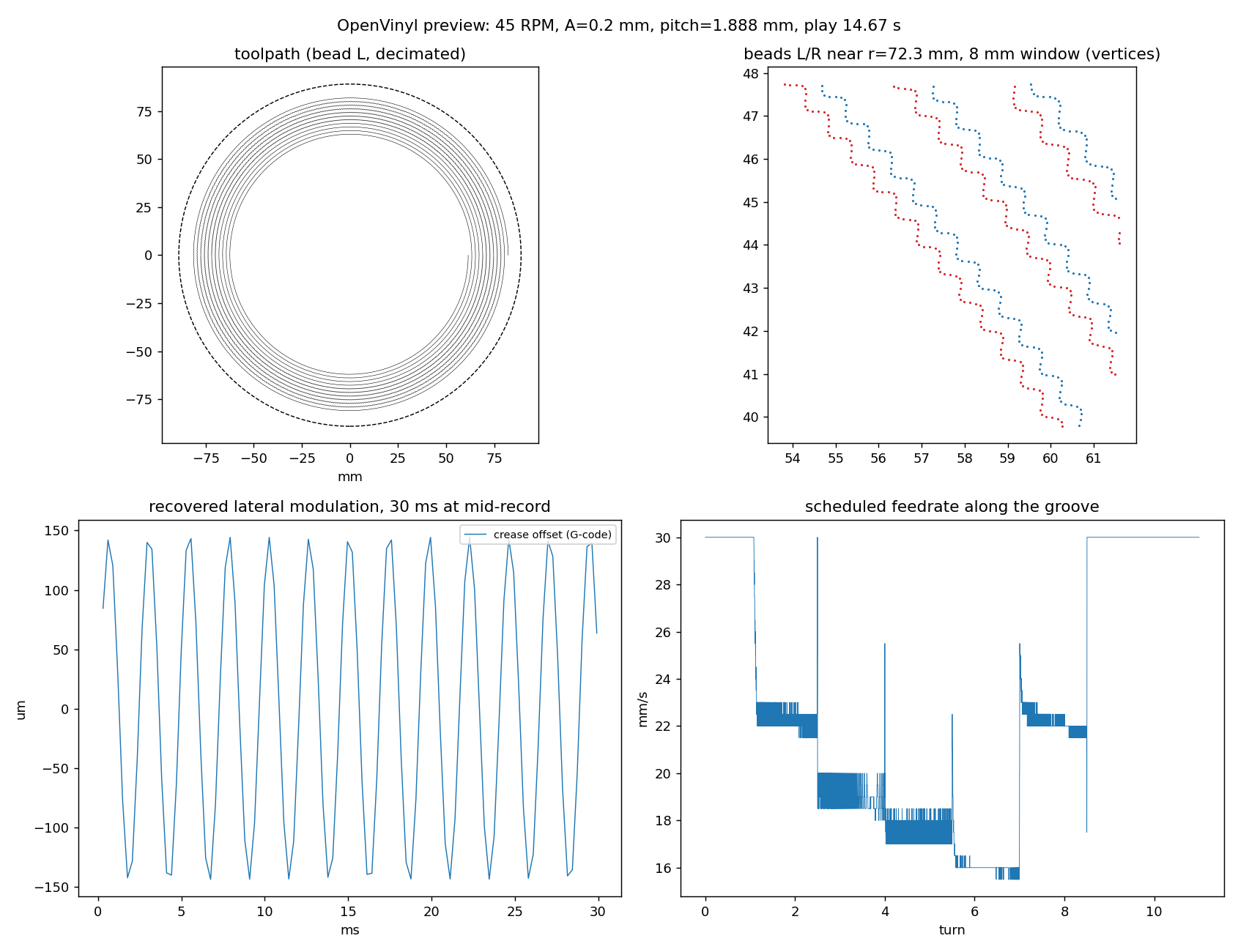
Preview of the stress disc: a 300 to 680 Hz tone ladder at 0.2 mm amplitude on a 7 inch, 45 RPM disc
OpenVinyl v1 demo
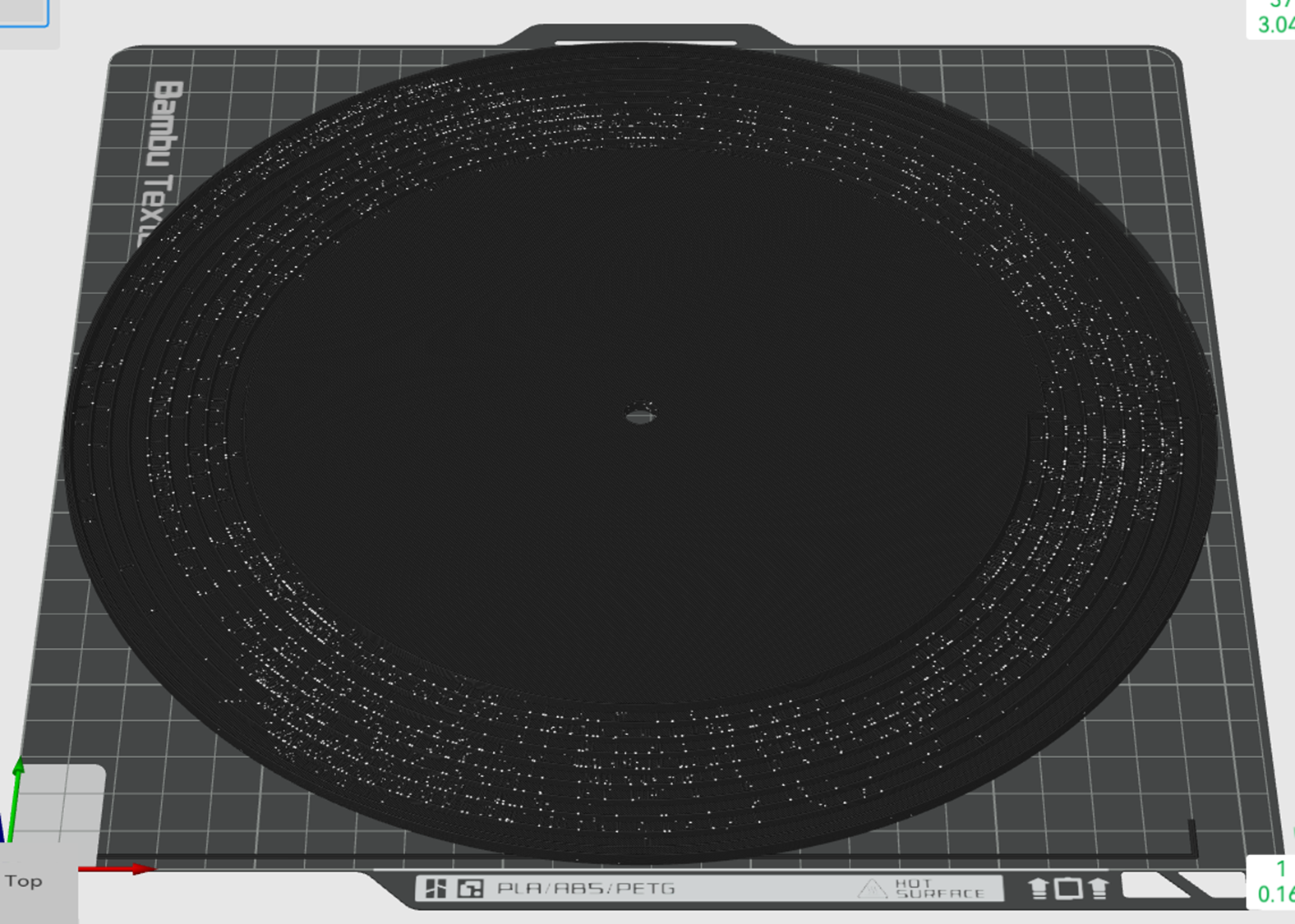
The sliced disc on the build plate: nine grooves on the outer band, a flat centre, 3.04 mm tall
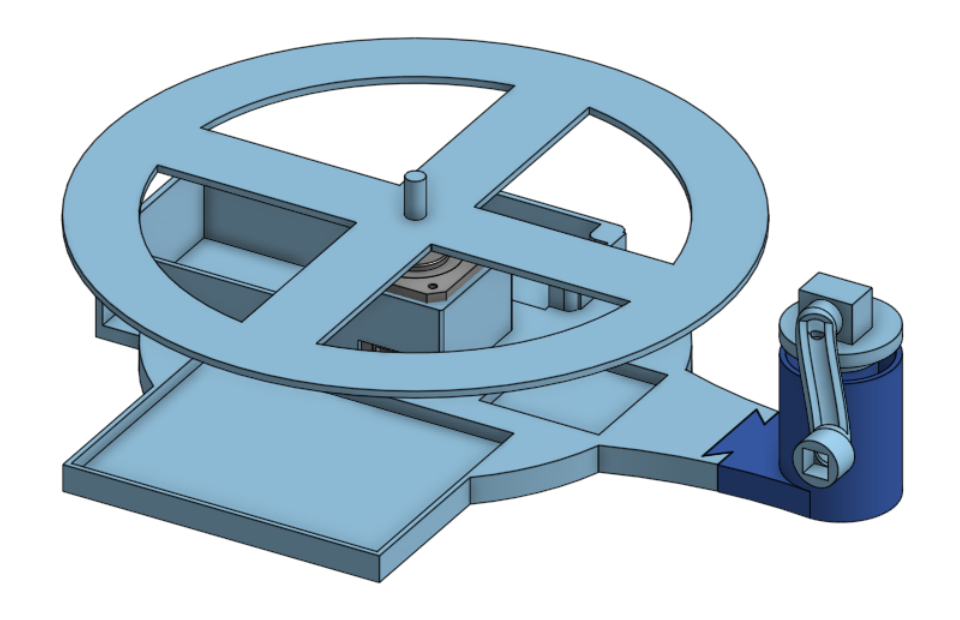
Initial turntable CAD (Samantha Chan)
The v1 signal chain snapping to 16 levels of 0.08 mm, then a toy record of 48 steps per turn and 3 turns built step by step. Open edges are drawn red and counted. The land bridge is withheld on turn two so the floating shell is visible, then the bridges, rim, inner disk and caps close the count to zero. The end cap goes in wound the wrong way first and is counted as an inside-out face.