Hand tremor stabilization in Neurosurgery (NeuroHack 2025)
Engineered a closed-loop hand tremor mitigation system: real-time transfer learning model to detect tremors and servo-based actuators to counteract them. Built and demonstrated in 48 hours; tremor reduction was not quantified.
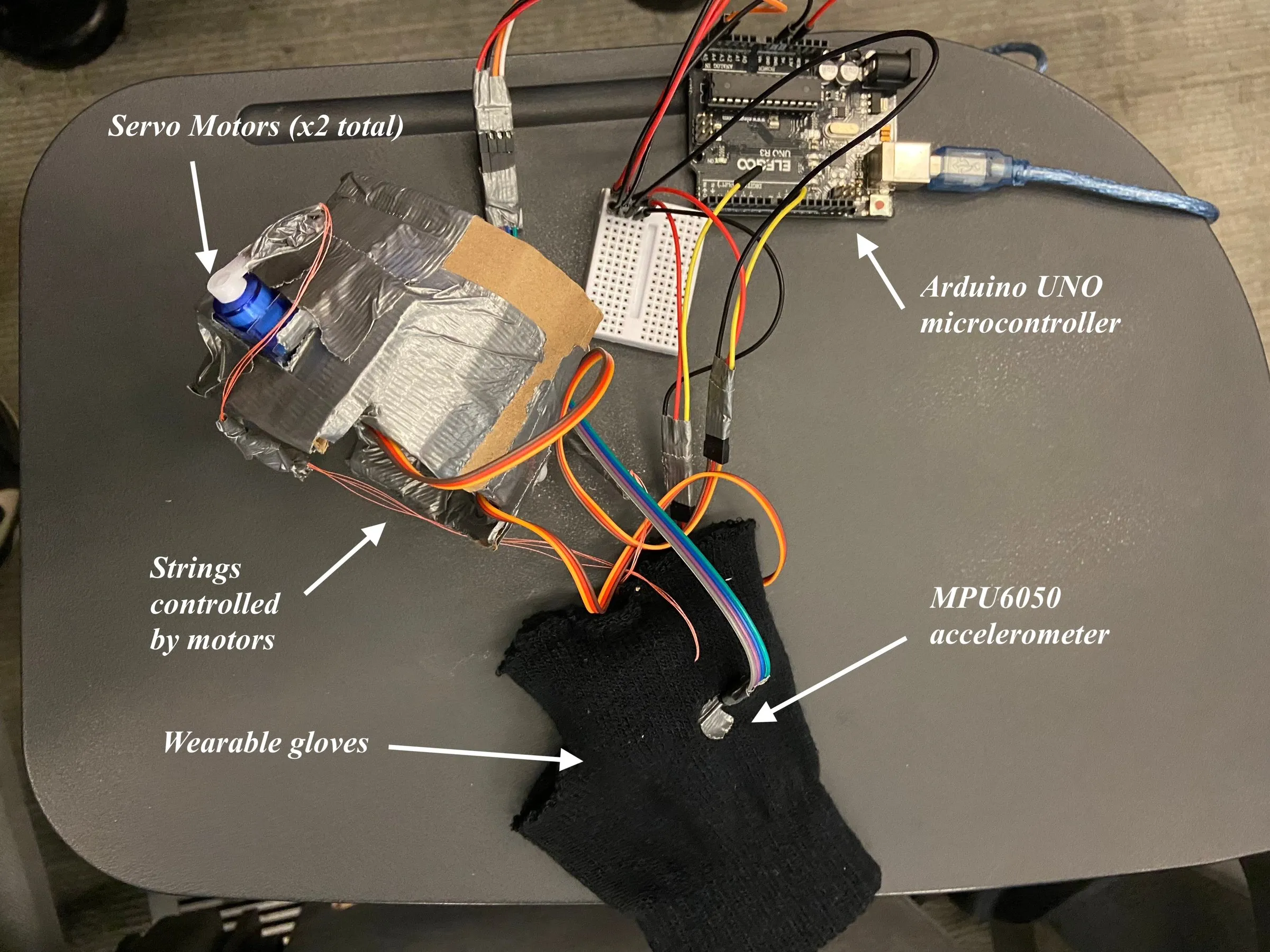
Built an end-to-end wearable prototype to stabilize nervousness-induced hand tremors using MPU6050 kinematics and servo-controlled string tension. The system uses a CNN-LSTM architecture with few-shot transfer learning (fine-tuned on Parkinson’s data) achieving 78% tremor detection accuracy. Ensembled the neural network with sliding window time-frequency analysis to reduce false positives. Awarded Best Prototype and placed Top 3 at University of Toronto’s NeuroHack2025.
Problem
At NeuroHack2025 (48-hour hackathon), we were tasked with improving surgical environment safety. We chose to tackle nervousness-induced hand tremors in surgeons. Looking back, there are bigger OR safety problems to solve. But the 48-hour constraint forced us to scope aggressively, and I’m proud we built a fully functional prototype that won Best Prototype and placed Top 3 overall.
The technical challenge: detect tremors in real-time with limited labeled data, then stabilize mechanically using only an Arduino starter kit.
This project taught me to work within severe hardware and time constraints while still shipping something that works end to end.
Method
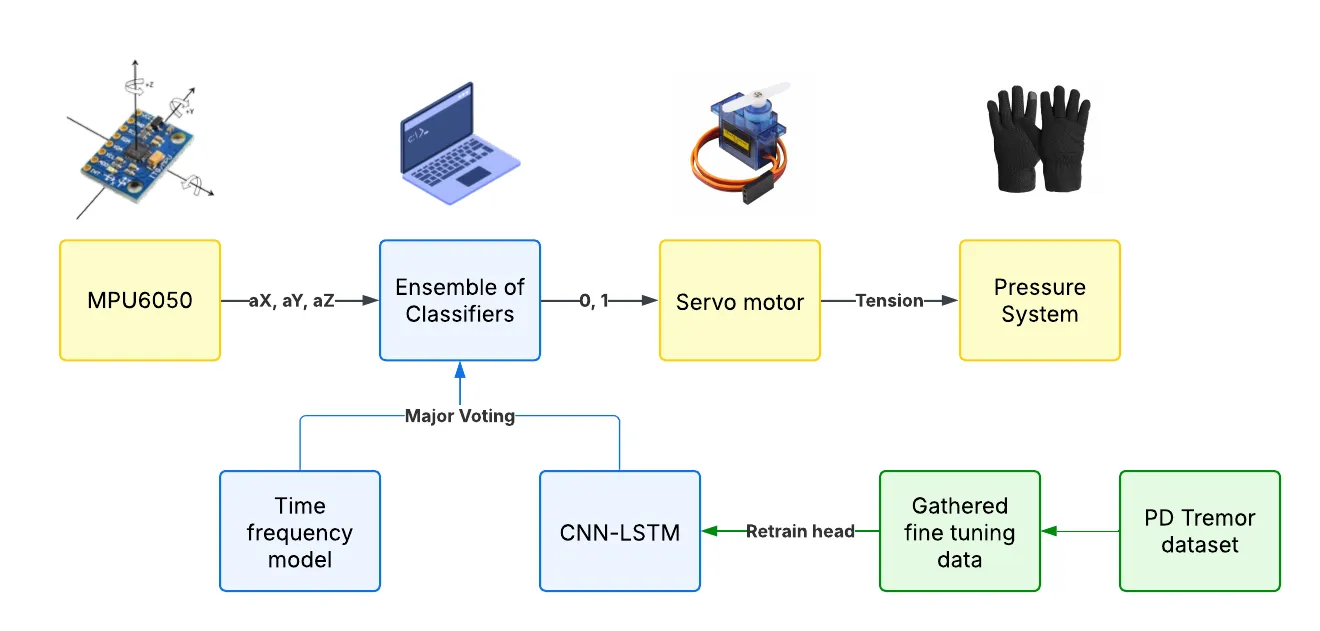
We adapted our design process for the hackathon format, prioritizing rapid prototyping over conceptual exploration. Two core specs: minimize cost (we had $0 budget beyond the starter kit) and ensure biocompatibility with surgical gloves. Split the system into three subsystems: data acquisition, tremor detection, and tremor stabilization.
Data Acquisition
Used an MPU6050 6-axis accelerometer/gyroscope mounted on the back of the hand in a wearable glove. Chose this over the MPU9250 (used in our training dataset) due to Arduino kit limitations. The logging firmware sampled at 20 Hz (a 50 ms loop) for a tremor range of 3-12 Hz (Parkinsonian tremors; we assumed similar for nervousness tremors). In hindsight that was too slow: 20 Hz only resolves content below 10 Hz, so the top of the band aliased, and a 12 Hz tremor shows up at 8 Hz. 100 Hz would have been the right choice.
We mirrored the Hand Tremor Dataset collection protocol as closely as possible to minimize domain shift in transfer learning.
Tremor Detection
Dataset Selection for Transfer Learning
We used a Parkinson’s disease tremor dataset because it was the only publicly available accelerometer tremor data we could find in 48 hours. Risky choice: the MPU9250 vs MPU6050 sensor difference and pathological tremors vs nervousness tremors might have different signatures.
To validate this approach, we quickly collected a custom dataset (20 minutes of simulated tremors from our 4-person team). Using t-distributed Stochastic Neighbor Embedding (t-SNE) to visualize the high-dimensional accelerometer data, we confirmed the source domain (Parkinson’s) and target domain (our simulated tremors) clustered reasonably close.
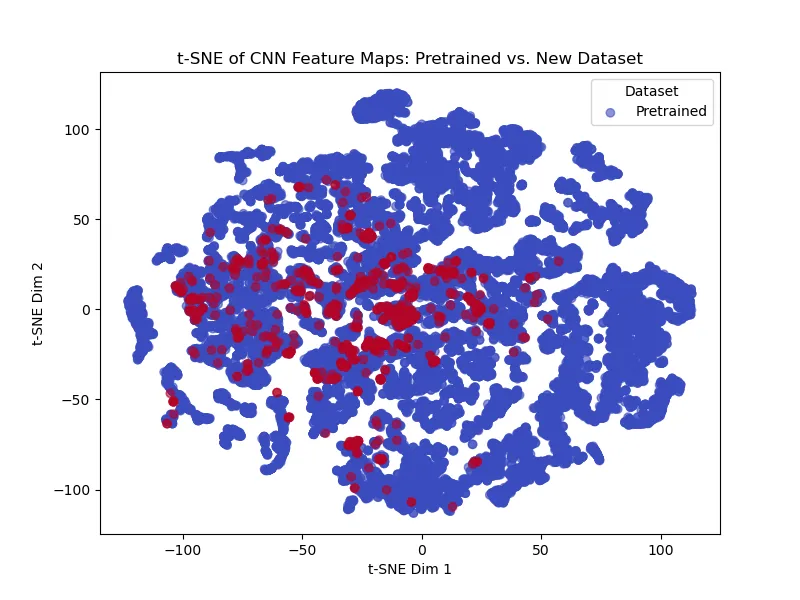
Not perfect, but good enough for a hackathon. In production, we’d need actual surgical tremor data.
Model Architecture: CNN-LSTM with Frozen Layers
Chose a 1D Convolutional Neural Network stacked with Long Short-Term Memory layers for two reasons:
- CNNs extract local features from time series (tremor frequency patterns)
- LSTMs capture temporal dependencies (tremor onset/offset dynamics)
We trained the full CNN-LSTM on the Parkinson’s dataset (85% accuracy), then froze the CNN-LSTM layers and only fine-tuned the final feed-forward layers on our custom dataset. This freeze decision was driven by two factors:
- Feature maps from CNN-LSTM layers overlapped significantly between domains (visualized using activation clustering)
- Our custom dataset was tiny (20 minutes) compared to Parkinson’s dataset (several hours)
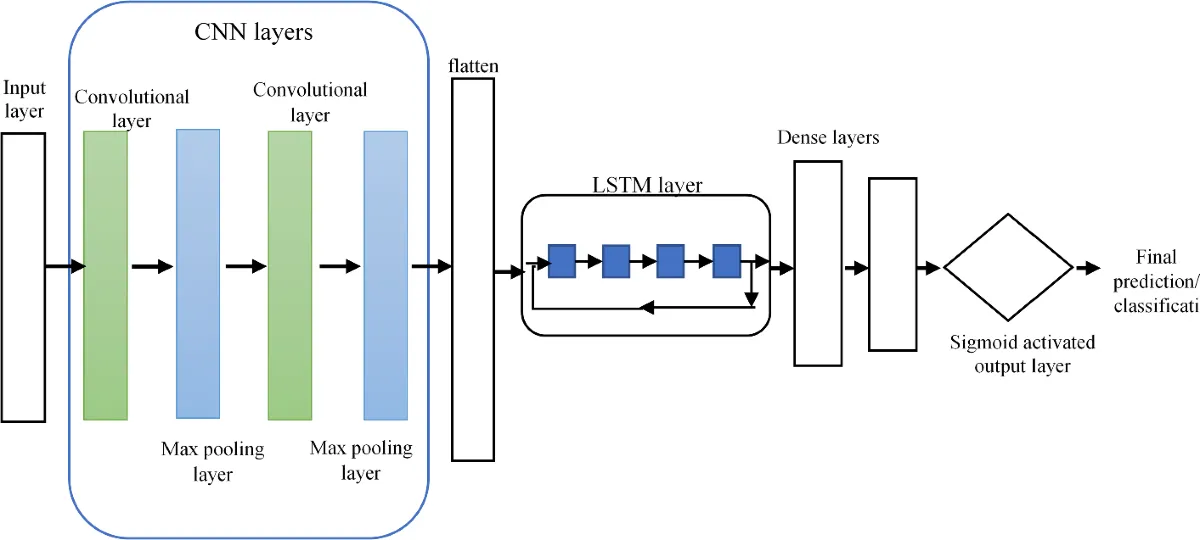
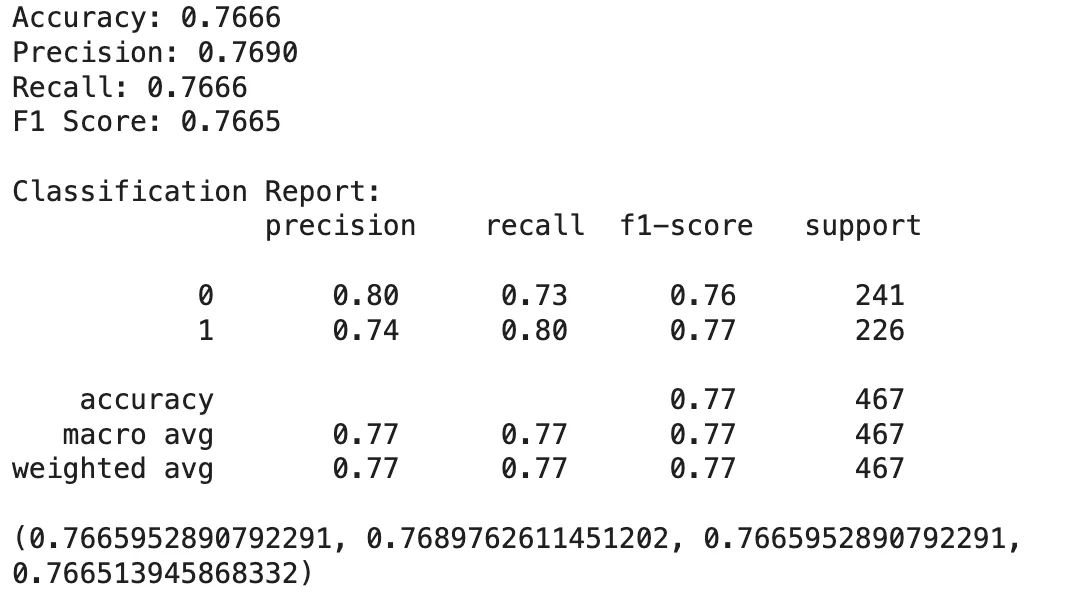
Final accuracy on our test set: 78% in 50 epochs. The 7% drop from 85% is expected given domain shift. We didn’t have time for data augmentation or explicit feature engineering (literature shows hand-crafted frequency domain features can push this to 85-90%).
Ensemble with Signal Processing
The CNN-LSTM alone was too sensitive to transient motion artifacts (scratching nose, adjusting mask). So we ensembled it with sliding window time-frequency analysis using a simple majority voting system. Run both methods on 2-second windows, only trigger stabilization if both agree.
Traditional signal processing (FFT-based frequency analysis) is robust but not sensitive enough alone. The neural network is sensitive but generates false positives. Ensemble balances both. In 48 hours, this was the fastest way to improve precision without retraining.
Building this ensemble taught me that production ML systems rarely rely on neural networks alone. Hybrid approaches combining classical signal processing with modern ML often outperform either method individually, especially with noisy sensor data.
Tremor Stabilization
Highly constrained by the Arduino starter kit. Model inference had to run on a laptop (no TinyML time), so the device stayed tethered within USB cable range.
We stabilized 1 degree of freedom: up/down wrist motion. This axis causes the most surgical damage (scalpel depth control). The mechanism: wearable glove connected via strings to servo motors mounted on a forearm sleeve. When tremor detected (majority vote above threshold), servos pull strings taut, putting the forearm-hand system in tension and dampening motion. Once tremor stops, servos return to neutral, slackening strings.
Tested on ourselves (no IRB, just hackathon demo). Subjectively reduced visible shaking, but we didn’t have time for quantitative validation with IMU measurements during stabilization.
This mechanical design experience reinforced that hardware constraints often dominate system architecture. The tether limitation would be unacceptable clinically, but for a proof-of-concept under extreme time pressure, we made the right tradeoff to demonstrate feasibility.
Solution evaluation
Strengths:
- Transfer learning validated faster than expected (t-SNE analysis took 30 minutes)
- Ensemble approach dramatically reduced false positives without retraining
- Mechanical stabilization was simple enough to prototype in 6 hours
Limitations:
- Initial attempt at 2D CNN on spectrogram images failed (overfitting on tiny dataset, scrapped after 4 hours)
- Actuation was slow: a 3-of-5 vote on 50 ms updates, then each servo sweeping 90° at 1° per 3 ms, one after the other, so the strings were taut about 0.7 s after the first detection. That is several tremor cycles, so the device stiffens the wrist for a sustained episode rather than cancelling individual oscillations. Piezoelectric actuators would be faster but weren’t in the kit
- Single DOF stabilization meant tremors in other axes weren’t addressed
- No clinical validation; simulated tremors may not match real surgical nervousness
If time was not a constraint, I’d prioritize collecting real surgical tremor data first, even if it meant delaying model development.
Future Work
To make this clinically viable:
-
Model improvements: Explicit feature engineering using wavelet transforms and spectral analysis (shown in literature to improve Parkinson’s tremor detection to 85-90%). Train on real surgical data, not simulated tremors. Implement 10-fold cross-validation for robust accuracy estimates.
-
Hardware migration: Port model to ESP32 or similar microcontroller using TinyML (TensorFlow Lite Micro) to eliminate laptop tether. Design custom Flex PCB and 3D-printed housing for integration with surgical gloves.
-
Multi-DOF stabilization: Replace servo-string mechanism with piezoelectric actuators embedded in smart fabric. This enables stabilization along multiple axes simultaneously and reduces response latency to <50ms.
-
Clinical validation: Partner with surgical residents to collect real nervousness tremor data during simulated procedures. Measure stabilization effectiveness quantitatively using IMU during actuation.
These extensions matter because they address the gap between a hackathon prototype and a device someone could rely on, which is mostly validation and safety work rather than new features.
Teamwork and My Role
My role: ML Engineer & System Integrator
- Transfer learning pipeline: I led the CNN-LSTM development. Analyzed the Parkinson’s dataset structure, implemented the model in PyTorch, ran the t-SNE validation, and made the decision to freeze layers based on feature map analysis.
- Data collection: Helped design the custom dataset collection protocol. We all took turns simulating tremors (shaking hands intentionally) while wearing the MPU6050 to build the fine-tuning dataset.
- Wearable design and integration: I designed the wearable system containing the MPU6050 and servos. Coordinated with the teammate who built the servo system to define the threshold and timing in the ensemble system for triggering stabilization.
Collaboration dynamics: The biggest challenge was coordinating mechanical and ML subsystems when we were building them in parallel with no formal interface spec. We iterated the trigger threshold 5-6 times during final integration because the servo response was slower and more inconsistent than expected.
Working under this time pressure taught me to communicate design decisions quickly and adapt to changing constraints while mechanical, electrical, and software subsystems were all changing at once.
Takeaways
Built a working tremor stabilization system in 48 hours that won Best Prototype at a university hackathon. The transfer learning approach worked despite domain shift concerns, and the hybrid ML/signal-processing ensemble was the right call for the time constraint.
Three things I learned:
- Validate transfer learning viability early with dimensionality reduction (t-SNE saved us from wasting time on incompatible datasets)
- Ensemble methods can rescue imperfect ML models faster than retraining, especially under time pressure
- Hardware constraints (Arduino kit, tether to laptop) force creative mechanical solutions
This project built my confidence in rapid prototyping of a full sensor-model-actuator pipeline. The same problems came back, with more time and better hardware, in the NeuroTech rehabilitation glove.